







Search Results for: coffee bean standards
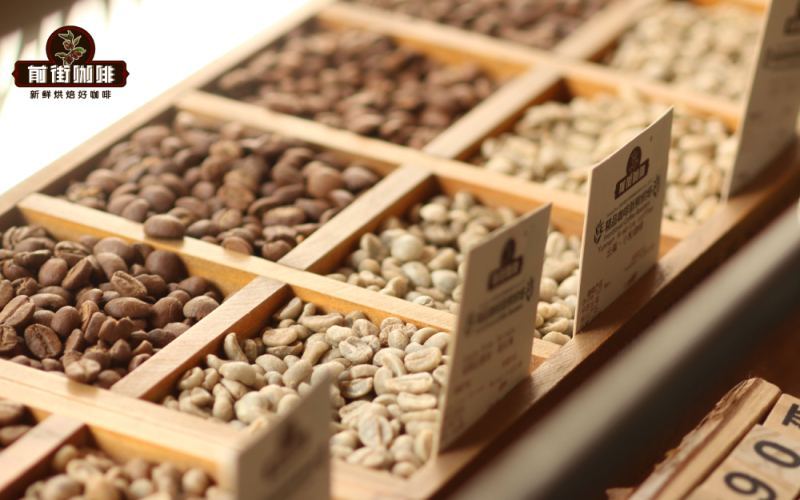
Yunnan Coffee Bean Grading System and Flavor Analysis: From Rating Standards to Front Street Specialty Recommendations
As an agricultural product, coffee inevitably varies in quality, so each producing region establishes a grading system to standardize quality and provide a reference for trading. Yunnan coffee currently follows the "Green Coffee Grade Inspection Standards" released in 2019, but self-assessed standards run rampant in the market, causing grades to become disconnected from flavor. This article will systematically sort out the grading criteria for Yunnan coffee, the commonly used international and domestic standards, the varietal evolution of Arabica coffee, and introduce Front Street Coffee's experimental cultivation and product recommendations in Yunnan, finally attaching practical brewing parameters to give you a comprehensive understanding of the current state and charm of Yunnan specialty coffee. [more…]
A Complete Guide to Green Coffee Bean Grades: Detailed Explanation of Grading Standards and Differences Across Countries, Including AA, G1, SHB, PB, and More
When buying coffee beans, have you ever been baffled by combinations of letters like AA, G1, SHB, and PB? They may seem to follow no pattern at all, but in fact each one represents the green bean grading standard of a different producing country. Why do coffee beans need to be graded? Why is there no unified global standard? This article will take you through the origins of green coffee bean grading, and how producing regions such as Ethiopia, Kenya, the Central American countries, Jamaica, and Brazil classify their beans based on defect rate, bean size, growing altitude, and cup quality. At the same time, we will also explore what these grades actually mean in the roasted coffee market, and recommend several Front Street Coffee beans corresponding to these grades, to help you better understand the cup of coffee in your hands. [more…]
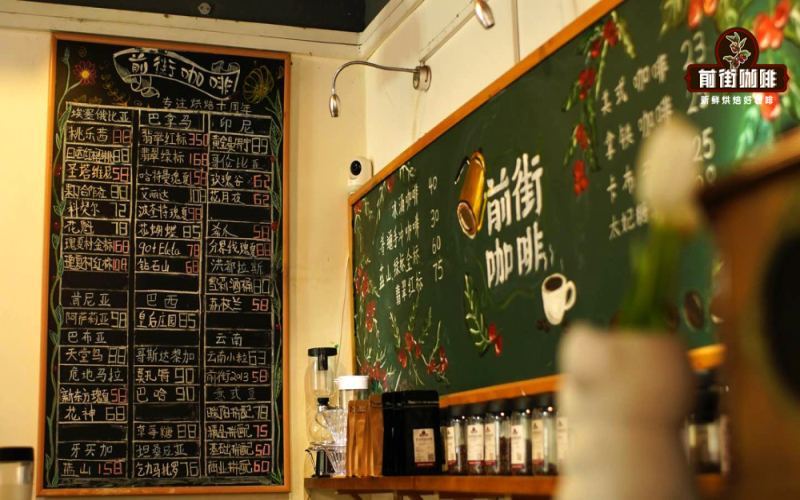
A Complete Guide to Coffee Bean Grading Standards: Meanings and Characteristics of Grades Such as G1, AA, AB, and SHB from Various Origins
When purchasing single-origin coffee beans, labels such as G1, AA, and SHB often appear on the packaging. What exactly do these letters and numbers represent? They are actually coffee bean grade symbols established by each origin based on its own conditions. Due to differences in growing environments and varieties, the grading criteria of different countries vary—some look at the number of defective beans, some at green bean size, and others at hardness or altitude. In this article, Front Street Coffee will sort out the grading standards of major producing regions such as Ethiopia, Kenya, Indonesia, Central and South America, and Brazil, helping coffee lovers understand the meaning behind these grades so they can more accurately select high-quality coffee beans that suit their own taste. [more…]
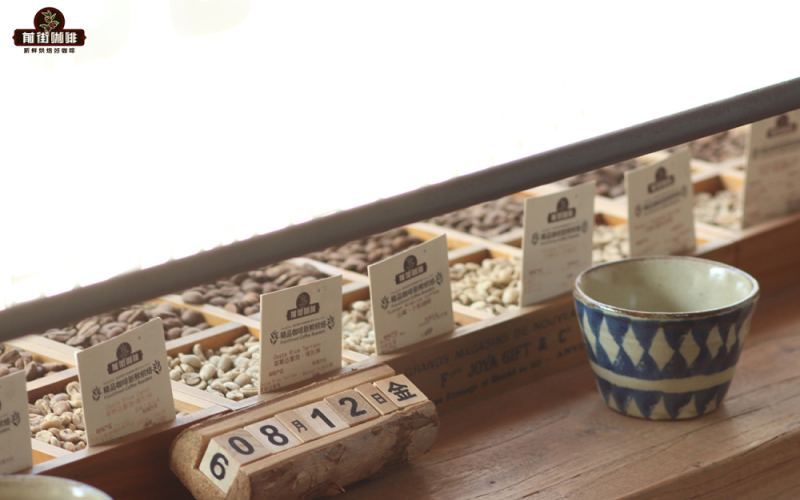
What grind size is standard for cupping? An analysis of how to determine the grind size and water temperature for pour-over black coffee
When you get an unfamiliar single-origin coffee bean, how do you accurately judge its flavor performance? Cupping is the industry-standard method. Front Street Coffee conducts cupping on every coffee bean it acquires, whether or not it goes on the shelves. This article uses the SCA cupping system as its benchmark and provides a detailed introduction to the equipment and parameters required for cupping, including sample bean processing, grind size calibration, coffee-to-water ratio, water quality and temperature requirements, as well as the operating procedures for dry aroma, wet aroma, breaking the crust, and skimming. After cupping is completed, the pour-over grind size and brewing water temperature must also be determined according to the roast level. Light-roast and medium-roast coffee beans each have different standards for sieve pass-through rate and water temperature selection. [more…]
An Analysis of Global Green Coffee Bean Grading Systems: A Comparison of Ethiopian and Kenyan Evaluation Standards
Coffee enthusiasts often ask Front Street: why are coffee bean grade labels so varied—some are marked AA, some G1, and others SHB? These letters seem to have no connection to one another, so how exactly can one judge which grade is superior? In fact, coffee bean grading systems are not uniform across producing regions worldwide, and the criteria they are based on also emphasize different things. This means that it is very difficult to make cross-country horizontal comparisons based on green bean grade alone. This article will systematically sort out the basic logic of coffee bean grading in various countries, and focus on introducing the grading standards of two major African producing regions, Ethiopia and Kenya, to help readers understand the meaning behind these letters and how green bean buyers refer to this grade information when purchasing. [more…]

A Complete Guide to the Golden Cup Standard for Pour-Over Coffee: The Golden Ranges for Extraction Yield and Strength, Plus Practical References
You often hear the "Golden Cup Standard" mentioned in coffee circles—what exactly does it mean? Simply put, it's an extraction reference range derived by Dr. Lockhart in the last century through extensive sampling surveys—when coffee's extraction yield and concentration fall within a specific range, most people find it tastes good. After subsequent research revisions, the optimal extraction yield was ultimately determined to be 18%~22%, and concentration 1.15%~1.35%. However, Front Street would like to remind everyone that the Golden Cup Standard is only a reference benchmark for beginners, not the sole criterion for whether coffee tastes good. This article will break down in detail the origins of the Golden Cup Standard, the meaning of extraction yield and concentration, and why coffee outside this range isn't necessarily bad—helping you understand the extraction logic of pour-over coffee more flexibly. [more…]
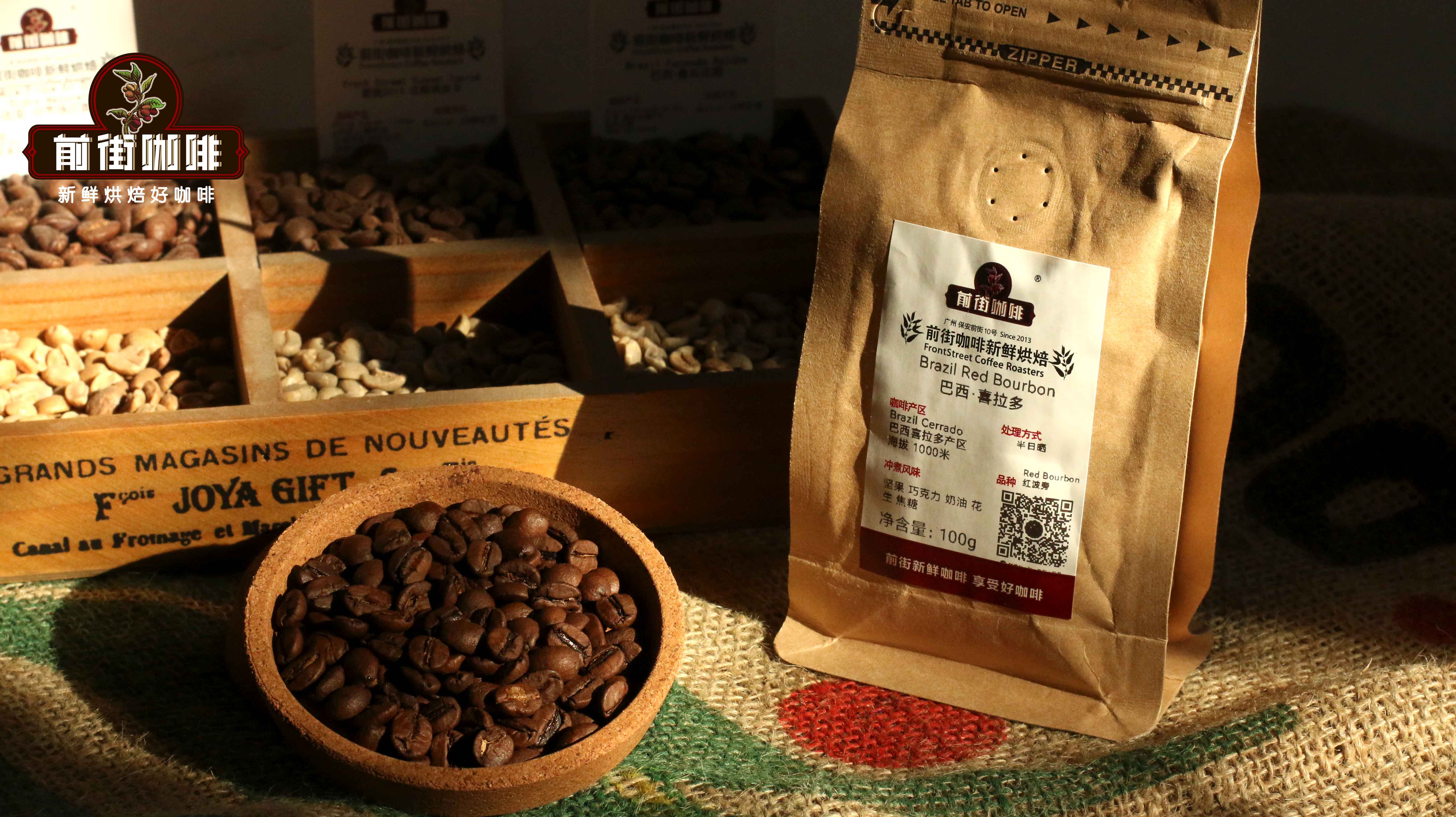
How Are Coffee Bean Roast Levels Classified? A Complete Analysis of National Standards, Flavor Assessment, and Brewing Parameters
Common labels on coffee bean packaging such as light roast, medium roast, and cinnamon roast often confuse beginners. The roast level directly determines the direction of coffee flavor, and historically different countries and regions have had their own schools of thought for defining roast levels, lacking a unified standard. The Specialty Coffee Association of America, together with Agtron, used infrared caramelization measurement values as the basis to divide roast levels from light to dark into eight grades, which has become an important industry reference. In this article, Front Street will systematically introduce the Agtron color values, drop times, and flavor characteristics of each roast level, and share how to judge the roast level through flavor descriptions, as well as the grinding degree and water temperature parameters that should be used for different roast levels. [more…]

How to Get the Grind Size Right for Pour-Over Coffee? Front Street Coffee Baristas Share Extraction Standards and Brewing Techniques
When brewing pour-over coffee, grind size is often the key variable that determines the direction of flavor. Front Street Coffee frequently receives inquiries about how fine a grind should be used for a particular bean, but in reality, beans from different origins, varieties, processing methods, and roast levels each have their own suitable grind standards. Based on the practical experience of Front Street Coffee stores, this article explains the mechanism by which grind size affects extraction time and extraction yield, introduces the reference values for the passing rate of the No. 20 standard sieve, and explains the differential handling of medium-light roast and dark roast beans. At the same time, the article also discusses the concept of golden cup extraction and its true purpose, and finally uses Colombia Rose Valley as an example to provide complete brewing parameters and staged extraction techniques, helping enthusiasts brew good coffee that suits their own taste. [more…]

Starbucks Ends Fair Trade Certification Partnership, Marking a Major Shift in Coffee Ethical Sourcing Standards
Starbucks has announced it will not renew its contract with Fairtrade, meaning coffee sold in its global stores will no longer carry the Fairtrade certification label. This decision has raised questions about its commitment to ethical sourcing. Starbucks says it will instead rely on the C.A.F.E. Practices standard, developed jointly with Conservation International and independently audited by the third-party organization SCS Global Services. However, many groups worry that without Fairtrade's independent oversight, the C.A.F.E. standard may not truly safeguard coffee farmers' rights on core issues such as minimum purchase prices and sourcing from smallholder cooperatives. This article reviews the history of Starbucks' partnership with Fairtrade, the origins and controversies of C.A.F.E. Practices, and Starbucks' past reversals on its ethical sourcing stance, offering coffee lovers a full picture of this event. [more…]
A Detailed Explanation of Jamaican Blue Mountain Coffee Bean Grading: A Full Analysis of the Standards from Blue Mountain to High Mountain to Select
The status of Blue Mountain coffee in the coffee world is almost universally known; even those who don't drink coffee often have heard the name. How exactly are Jamaican Blue Mountain coffees graded? From Blue Mountain to High Mountain to Prime, what are the elevation thresholds, screen size requirements, and defect rate standards for each grade? This article will guide you through a systematic understanding of Jamaica's coffee grading system, from the history of the producing region and the geographical conditions of the Blue Mountain range to the specific grade parameters set by the CIB, and will introduce the Jamaica Blue Mountain No. 1 coffee on Front Street Coffee's bean list, helping you gain a comprehensive understanding of the strict standards behind this world-class coffee. [more…]
A Detailed Explanation of the Ethiopian Coffee Bean Grading System: Standard Differences and Flavor Comparison Between Yirgacheffe G1 and G2
As the birthplace of coffee, Ethiopia's grading system directly affects the quality and flavor expression of coffee beans. The Yirgacheffe region is world-renowned, but what exactly is the difference between the commonly seen Front Street Yirgacheffe G1 and G2 coffee beans on the market? Behind this lies the evolution of Ethiopia's coffee grading system. From CLU to ECX, from simple defect counting to a comprehensive score combining physical characteristics and cupping flavor, the grading standards have undergone major changes. This article will systematically review the historical development and specific standards of Ethiopian coffee grading, compare the grading differences between washed and natural processing, and through three dimensions—green bean appearance, roasted bean appearance, and cupping flavor—deeply analyze the actual differences between Front Street Yirgacheffe G1 and G2, helping coffee enthusiasts understand the quality implications behind the grade numbers. [more…]
A Comprehensive Analysis of the Green Coffee Bean Grading System: The Three Major Standards of Screen Size, Altitude, and Defect Rate, and the Characteristics of Kenyan Grading
As an agricultural product, coffee beans vary significantly in quality, so a grading system is needed to standardize quality and provide reference for buyers. However, the geographical environments and cultivation models of global producing regions differ enormously, making it impossible to measure them with a unified standard; each region can only adapt to local conditions. Currently, mainstream grading methods fall into three major categories: screen size, altitude/hardness, and defect rate, and many countries combine them or even add cupping to compensate for shortcomings. This article will systematically sort out the logic and representative producing countries of these three grading methods, with a focus on analyzing how Kenya grades solely by bean size, and introduce the grading practices of Colombia, Ethiopia, Jamaica, Indonesia, Brazil, and other countries. Front Street Coffee will also share related brand product information to help coffee enthusiasts understand the meaning behind green bean grades. [more…]
Colombian Coffee Bean Grading Standards, Huila Washed Flavor Characteristics, and Brewing Parameter Guide
Colombian coffee, with its soft berry acidity, roasted nut aroma, and caramel sweetness, has become a favorite among many pour-over beginners. As the world's second-largest Arabica producer, Colombia's volcanic soil and high-altitude microclimates give its coffee beans a full, solid mouthfeel. This article will systematically sort out the grading system for Colombian green beans—how many screen sizes Supreme, EP, and U.G.Q correspond to respectively, clarify the common misconception that Excelso is not a grade but an export standard, and introduce the flavor profile of washed beans from the Huila region along with Front Street Coffee's recommended V60 three-pour brewing method, helping coffee lovers experience the unique charm of Colombian coffee at an affordable cost. [more…]
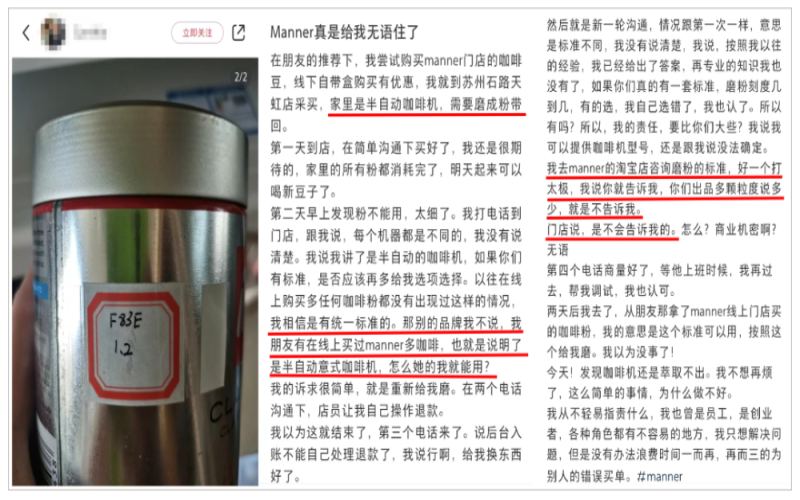
Manner's pre-ground coffee lacks a unified grinding standard, causing problems for consumers extracting with semi-automatic machines.
Recently, a complaint about Manner's coffee grinding service sparked heated discussion on social media. A customer reported that after buying coffee beans at a store and asking the staff to grind them, they found that their semi-automatic espresso machine at home could not extract espresso properly, and suspected the grind was too fine. When the customer asked whether Manner had a unified grinding standard for its grinding service, neither the online customer service nor the store staff could give a clear answer. This incident brings up an oft-repeated topic in the coffee community: is there really such a thing as a standard grind size for coffee powder used in semi-automatic espresso machines? Multiple industry practitioners and seasoned enthusiasts have offered their views, and the boundaries of chain brands' grinding services have once again drawn attention. [more…]
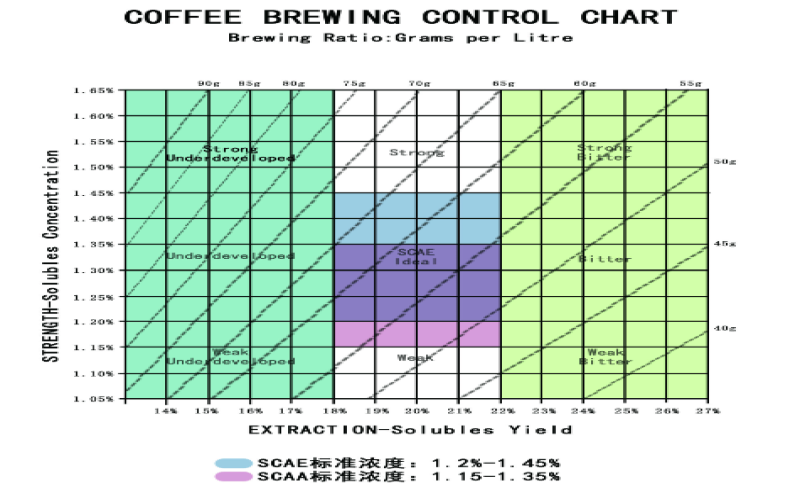
Gold Cup Extraction Standard Explained: Concentration and Extraction Yield Calculation Methods and SCAA Standard Ranges
In coffee brewing, how to balance flavor and avoid under-extraction or over-extraction is a concern for every coffee enthusiast. The Golden Cup standard provides a widely recognized reference framework, covering the ideal ranges for extraction yield and concentration. This article will systematically review the origins of the Golden Cup standard and the specific values set by coffee associations in various countries, explain in detail the formulas for calculating concentration and extraction yield, and, using the example of Front Street Coffee's Ethiopia Florque 4.0 pour-over, demonstrate how to measure and calculate extraction yield with an ExtractMoJo refractometer, helping you find the flavor balance point that suits you in your daily brewing. [more…]
Jamaica Blue Mountain Coffee Certification Standards and Authentic Price Reference: Front Street Explains Origin Rules
Jamaican Blue Mountain coffee is famous for its balanced flavor and scarce production, but what exactly are the standards for authentic beans and the pricing system? Starting from the certification standards of Front Street Jamaican Blue Mountain coffee, this article reviews the Jamaican government's quality control journey since 1944, the list of five officially certified processing plants, and the complete process of Blue Mountain coffee from hand-picking to barrel shipping. It also analyzes the medium-roast characteristics and flavor performance of Front Street Blue Mountain coffee beans, and compares global production and market conditions, helping coffee lovers distinguish authentic Blue Mountain from imitation blended beans. [more…]
Detailed Explanation of Yunnan Coffee Grade 2 Classification Standards: A Full Analysis of Physical, Chemical, and Hygiene Indicators and Quality Grades
Yunnan is a major coffee-producing region in China, and its coffee bean grading system is crucial for quality control. What tier does Special Grade 2 occupy? This article breaks down the specific requirements for Yunnan coffee beans at Special Grade 2 one by one, from appearance and sensory attributes, physical indicators, and chemical indicators to hygiene standards, including hard data such as a granule size of 7.1 mm, broken beans not exceeding 10%, and moisture content ≤12.5%. Understanding these standards not only helps you judge coffee bean quality but also helps you make wiser choices when purchasing. Front Street Coffee will also share related product information in the article, making it suitable for coffee enthusiasts who want to gain a deeper understanding of the grading logic for Yunnan beans. [more…]

A Detailed Explanation of Colombian Green Coffee Bean Grading: The Meaning of Supremo and Excelso and Screen Size Standards
When purchasing Colombian coffee, what exactly do Supremo and Excelso, commonly seen on burlap sacks, represent? What is the relationship between the two? This article will systematically sort out the grading system for Colombian green coffee, interpreting one by one the specific requirements of grades such as UGQ, EP, and Supremo, from defect rates and screen sizes to FNC export standards. It will also introduce derivative grades such as Extra, Premium, and Minama, as well as the use of Product of Colombia for coffee that does not meet export standards. The article also includes an actual naming example of Front Street Coffee's Huila daily drinking beans, helping readers understand the compositional logic and traceability methods of Colombian green coffee names. [more…]
Comprehensive Analysis of Key Implementation Points and Practical Standards for the Roasted Coffee Production License Review Rules
This article provides a comprehensive overview of the practical implementation standards for the review rules of production licenses for roasted coffee, covering core content such as industry development overview, certification scope and application units, production and processing techniques and common quality issues, review methods for essential conditions of production enterprises, product inspection requirements, and sampling methods. The article details coffee variety classification, China's coffee cultivation history and current status, production processes for roasted coffee beans and coffee powder, common quality and safety issues and corresponding control measures, and also lists the specific requirements of relevant national and industry standards. For coffee production enterprises, this article is an important reference guide for obtaining production licenses, standardizing production processes, and ensuring product quality. [more…]
What is Rainforest Alliance certification? What environmental and fair trade standards does the green frog logo on coffee beans represent?
When selecting coffee beans, you may have noticed a green frog printed on the packaging — this is the Rainforest Alliance certification mark. Behind it lies a set of strict agricultural and environmental standards, covering ecological protection, farmers' rights, labor conditions, and sustainable development. Since the Rainforest Alliance was founded in New York in 1987, it has helped certify over one hundred million acres of crops, with coffee being one of the most traded agricultural products among them. This article will walk you through the core philosophy of the Rainforest Alliance, the specific standards for certified crops, and what this mark means for consumers and the coffee industry, helping you gain a more comprehensive understanding of the environmental and social value behind your everyday coffee choices. [more…]